
README







[!TIP] New: Connect MemOS to DeepSeek Harness (
dsh)Add automatic recall, background capture, hybrid retrieval, and a local Memory Viewer to DeepSeek Harness—powered by the same MemOS core used across agent ecosystems.
👾 MemOS: Memory Operating System for LLM & AI Agents
MemOS is a Memory Operating System for LLMs and AI agents that unifies store / retrieve / manage for long-term memory, enabling context-aware and personalized interactions with KB, multi-modal, tool memory, and enterprise-grade optimizations built in.
Key Features
- Unified Memory API: A single API to add, retrieve, edit, and delete memory—structured as a graph, inspectable and editable by design, not a black-box embedding store.
- Multi-Modal Memory: Natively supports text, images, tool traces, and personas, retrieved and reasoned together in one memory system.
- Multi-Cube Knowledge Base Management: Manage multiple knowledge bases as composable memory cubes, enabling isolation, controlled sharing, and dynamic composition across users, projects, and agents.
- Asynchronous Ingestion via MemScheduler: Run memory operations asynchronously with millisecond-level latency for production stability under high concurrency.
- Memory Feedback & Correction: Refine memory with natural-language feedback—correcting, supplementing, or replacing existing memories over time.
News
-
2026-08-17 · 🐋 MemOS Connects with DeepSeek Harness MemOS now brings persistent memory to DeepSeek Harness through both local and cloud plugins. DSH can automatically recall relevant context before a task and retain new experience after a successful turn, without modifying its core.
-
2026-07-02 · 🏆 MemOS Advances Agent and User Memory Benchmarks With MemOS, OpenClaw improves average task completion from 36.63% to 50.87% across five agent tasks. MemOS also achieves 88.83 on LoCoMo and 89.20 on LongMemEval, and leads in OmniMemEval, a unified evaluation of 14 commercial memory products across ten datasets.
-
2026-05-09 · 🧠 memos-local-plugin 2.0 Official local memory plugin for Hermes Agent and OpenClaw. One core powers self-evolving memory across L1 traces, L2 policies, L3 world models, and crystallized Skills, with local-first storage and feedback-driven retrieval.
-
2026-04-10 · 👧🏻 MemOS Hermes Agent Local Plugin Official Hermes Agent memory plugins launched: Hybrid retrieval (FTS5 + vector), smart dedup, tiered skill evolution, multi-agent collaboration. 100% local, zero cloud dependency.
-
2026-03-08 · 🦞 MemOS OpenClaw Plugin — Cloud & Local Official OpenClaw memory plugins launched. Cloud Plugin: hosted memory service with 72% lower token usage and multi-agent memory sharing (MemOS-Cloud-OpenClaw-Plugin). Local Plugin (
v1.0.0): 100% on-device memory with persistent SQLite, hybrid search (FTS5 + vector), task summarization & skill evolution, multi-agent collaboration, and a full Memory Viewer dashboard.
📊 Performance
MemOS leads across multiple benchmarks — evaluated against mainstream commercial memory products across 5 user memory and 5 agent memory tasks.
| Benchmark | Score |
|---|---|
| LoCoMo | 88.83 |
| LongMemEval | 89.20 |
| PersonaMem v2 | 40.58 |
| HaluMem | 80.91 |
| BEAM-10M | 56.75 |
| GDPVal | 62.07 |
| LiveCodeBench | 64.96 |
| OmniMath | 61.00 |
| SWE-Bench | 38.46 |
| BrowseComp-Plus | 23.85 |
Evaluated via OmniMemEval — https://github.com/MemTensor/OmniMemEval.
🎯 What MemOS Is For
MemOS gives AI agents long-term memory. Common uses:
- AI assistants with consistent, context-rich conversations
- Customer support that recalls past tickets and user history
- Personalized agents that adapt to individual preferences
- Multi-agent collaboration with shared or isolated memory
🚀 Quick Start
MemOS is built around four entry points. Pick the one that matches your scenario.
| Cloud API | Self-Host | MemOS Cloud Plugin | Local Plugin | |
|---|---|---|---|---|
| Best for | Your app, fully managed | Teams on own infra | OpenClaw users, zero ops | DeepSeek Harness, Hermes, or OpenClaw; on-device |
| Setup | Get an API key | docker compose up | openclaw plugins install | npm install + agent-specific setup |
| Infra needed | None (hosted) | Neo4j + Qdrant | None (uses MemOS Cloud) | None (local SQLite) |
| Data lives | MemOS Cloud | Your servers | MemOS Cloud | Your machine |
☁️ Use the Cloud API (Hosted)
You want to add memory to your app through a fully managed service — no infrastructure to run.
1. Get an API key:
- Sign up on the MemOS dashboard.
- Go to API Keys and copy your key (starts with
mpg-). Keep it server-side.
2. Add and search memories:
import requests

API_KEY = "mpg-..."                  # keep this server-side
base = "https://memos.memtensor.cn/api/openmem/v1"
headers = {"Authorization": f"Token {API_KEY}", "Content-Type": "application/json"}

# 1. Add a memory
requests.post(f"{base}/add/message", headers=headers, json={
    "user_id": "alice",
    "conversation_id": "conv_001",
    "messages": [{"role": "user", "content": "I like strawberry"}],
})

# 2. Search memories
res = requests.post(f"{base}/search/memory", headers=headers, json={
    "query": "What do I like?",
    "user_id": "alice",
})
print(res.json())
Next steps:
- MemOS Cloud Getting Started — connect to MemOS Cloud and enable memory in minutes.
- MemOS Cloud Platform — explore the Cloud dashboard, features, and workflows.
🖥️ Self-Host the MemOS Service
You want to run MemOS as a REST service on your own machine or cluster.
Option A — Docker (recommended):
git clone https://github.com/MemTensor/MemOS.git
cd MemOS
cp docker/.env.example .env          # fill in your API keys in .env
cd docker
docker compose up                    # starts MemOS API + Neo4j + Qdrant
The API is served at http://localhost:8000.
Option B — Run with uvicorn (without Docker):
git clone https://github.com/MemTensor/MemOS.git
cd MemOS
cp docker/.env.example .env          # fill in your API keys in .env
# Ensure Neo4j and Qdrant are running, then:
cd src
uvicorn memos.api.server_api:app --host 0.0.0.0 --port 8000 --workers 1
See [docker/.env.example](./docker/.env.example) for all configuration options (LLM provider, embedder, vector DB, graph DB, scheduler). The full deployment guide is at https://memos-docs.openmem.net/open_source/getting_started/rest_api_server/.
Try the API:
import requests, json

headers = {"Content-Type": "application/json"}
base = "http://localhost:8000/product"

# 1. Create a memory cube
requests.post(f"{base}/create_cube", headers=headers, data=json.dumps({
    "cube_name": "Alice's memory",
    "owner_id": "alice",
    "cube_id": "alice_cube",
}))

# 2. Add a memory
requests.post(f"{base}/add", headers=headers, data=json.dumps({
    "user_id": "alice",
    "writable_cube_ids": ["alice_cube"],
    "messages": [{"role": "user", "content": "I like strawberry"}],
    "async_mode": "sync",
}))

# 3. Search memories
res = requests.post(f"{base}/search", headers=headers, data=json.dumps({
    "query": "What do I like?",
    "user_id": "alice",
    "readable_cube_ids": ["alice_cube"],
}))
print(res.json())
🧠 MemOS Plugin: Persistent Memory for Your AI Agents ✨
MemOS gives OpenClaw, Hermes, and DeepSeek Harness a shared local memory core; the managed MemOS Cloud Plugin is available for OpenClaw and DeepSeek Harness 🏃🏻
| 🔌 Plugin | 💡 Core Features | 🧩 Resources |
|---|---|---|
| 🧠 memos-local-plugin 2.0 | 🌐 Website · 📖 Docs · 🐙 GitHub · 📦 NPM | |
| ☁️ MemOS Cloud Plugin | 🖥️ MemOS Dashboard · 📖 Full Tutorial |
1. MemOS Cloud Plugin
Use MemOS Cloud for persistent memory in OpenClaw or DeepSeek Harness — no infrastructure to run.
- Repo: MemTensor/MemOS ·
apps/MemOS-Cloud-OpenClaw-Plugin - NPM:
[@memtensor/memos-cloud-openclaw-plugin](https://www.npmjs.com/package/@memtensor/memos-cloud-openclaw-plugin) - Dashboard: https://memos-dashboard.openmem.net/
- Tutorial: https://memos-docs.openmem.net/openclaw/guide
Install:
openclaw plugins install @memtensor/memos-cloud-openclaw-plugin@latest
openclaw gateway restart
The plugin recalls memories from MemOS Cloud before each agent run and saves new messages back after the run ends.
DeepSeek Harness
Connect DeepSeek Harness to MemOS Cloud through its native plugin mechanism. Before the first model step of each user request, the plugin recalls relevant cloud memories; after a successful turn, it saves the new user and assistant messages back to MemOS Cloud.
-
Install the cloud plugin into the default DSH
webprofile:npx @deepseek-ai/dsh plugin --profile web add @memtensor/memos-cloud-dsh-plugin@latest -
Add the API Key to
~/.dsh/.credentials.yaml:MEMOS_API_KEY: mpg-your-key -
Add the minimal plugin configuration to
~/.dsh/settings.yaml:memos-cloud: apiKeyEnv: MEMOS_API_KEY -
Restart the DSH Web profile:
npx @deepseek-ai/dsh web
The cloud plugin is fail-open: a temporary MemOS Cloud outage does not interrupt the current DSH task.
2. Local Plugin (OpenClaw, Hermes, and DeepSeek Harness)
You use DeepSeek Harness, Hermes Agent, or OpenClaw and want 100% on-device memory — nothing leaves your machine.
- Repo: MemTensor/MemOS ·
apps/memos-local-plugin - NPM:
[@memtensor/memos-local-plugin](https://www.npmjs.com/package/@memtensor/memos-local-plugin) - Docs: https://memos-docs.openmem.net/cn/openclaw/local_plugin
- DeepSeek Harness: integration details
- Viewer dashboard: see
apps/memos-local-plugin/viewer/
Install for DeepSeek Harness (macOS / Linux):
curl -fsSL https://raw.githubusercontent.com/MemTensor/MemOS/main/apps/memos-local-plugin/install.sh | bash -s -- --agent dsh --profile web
Install for OpenClaw or Hermes (macOS / Linux):
curl -fsSL https://raw.githubusercontent.com/MemTensor/MemOS/main/apps/memos-local-plugin/install.sh | bash
Install (Windows PowerShell):
irm https://raw.githubusercontent.com/MemTensor/MemOS/main/apps/memos-local-plugin/install.ps1 -OutFile "$env:TEMP\memos-install.ps1"; powershell -ExecutionPolicy Bypass -File "$env:TEMP\memos-install.ps1"
Requires Node.js and an already-installed DeepSeek Harness, OpenClaw, or Hermes. The installer deploys MemOS to the selected agent runtime; the DeepSeek Harness target installs it as an out-of-tree DSH bundle, while the OpenClaw and Hermes targets write the initial config.yaml in their respective agent homes.
Features: hybrid retrieval (FTS5 + vector), smart dedup, tiered skill evolution (L1 traces / L2 policies / L3 world model), multi-agent collaboration, local-first SQLite storage.
🤝 Community
- GitHub Issues: https://github.com/MemTensor/MemOS/issues
- GitHub Discussions: https://github.com/MemTensor/MemOS/discussions
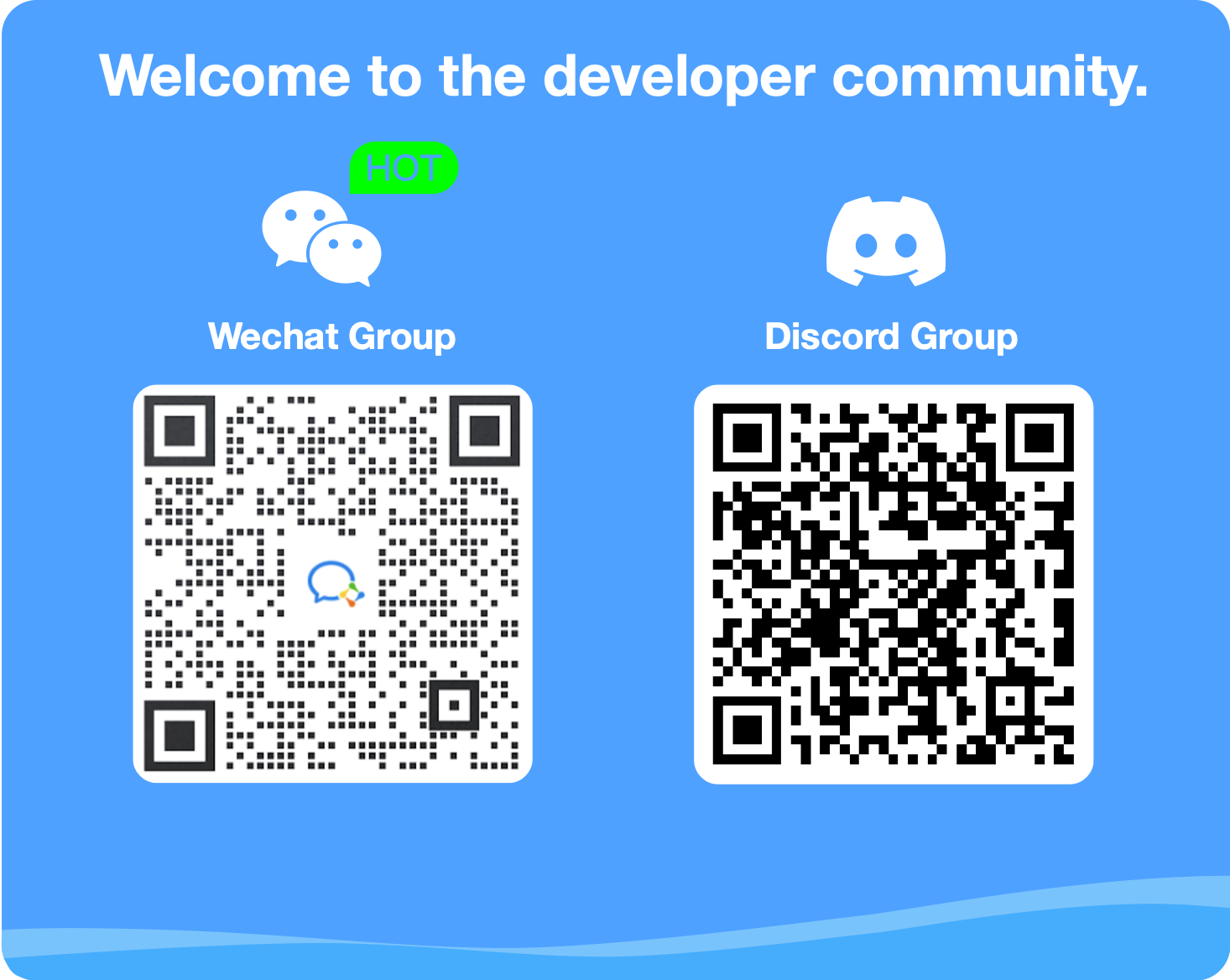
- Discord: https://discord.gg/Txbx3gebZR
- WeChat: scan the QR code to join the group.
📚 Citation
If you use MemOS in your research, please cite:
@article{li2025memos_long,
  title={MemOS: A Memory OS for AI System},
  author={Li, Zhiyu and Song, Shichao and Xi, Chenyang and Wang, Hanyu and Tang, Chen and Niu, Simin and Chen, Ding and Yang, Jiawei and Li, Chunyu and Yu, Qingchen and Zhao, Jihao and Wang, Yezhaohui and Liu, Peng and Lin, Zehao and Wang, Pengyuan and Huo, Jiahao and Chen, Tianyi and Chen, Kai and Li, Kehang and Tao, Zhen and Ren, Junpeng and Lai, Huayi and Wu, Hao and Tang, Bo and Wang, Zhenren and Fan, Zhaoxin and Zhang, Ningyu and Zhang, Linfeng and Yan, Junchi and Yang, Mingchuan and Xu, Tong and Xu, Wei and Chen, Huajun and Wang, Haofeng and Yang, Hongkang and Zhang, Wentao and Xu, Zhi-Qin John and Chen, Siheng and Xiong, Feiyu},
  journal={arXiv preprint arXiv:2507.03724},
  year={2025},
  url={https://arxiv.org/abs/2507.03724}
}

@article{li2025memos_short,
  title={MemOS: An Operating System for Memory-Augmented Generation (MAG) in Large Language Models},
  author={Li, Zhiyu and Song, Shichao and Wang, Hanyu and Niu, Simin and Chen, Ding and Yang, Jiawei and Xi, Chenyang and Lai, Huayi and Zhao, Jihao and Wang, Yezhaohui and others},
  journal={arXiv preprint arXiv:2505.22101},
  year={2025},
  url={https://arxiv.org/abs/2505.22101}
}
⚖️ License
MemOS is licensed under the Apache 2.0 License.
更多「会话与消息」插件
dsh-anchored-standard
作者 xiaobright
DeepSeek Harness 两阶段预设:先最小对齐引导,再启用完整标准工具集。
mem9
作者 mem9-ai
每轮自动回忆 + 后台智能摄取 + 五个记忆工具,为 DSH 加持记忆。
mindmemos
作者 mindscale-noah
为 DSH 智能体提供跨会话持久记忆,每轮自动召回相关上下文并回写经验,通过模式学习与技能蒸馏持续进化。
engramory
作者 tinqiao-oss
面向 AI 智能体的可移植记忆协议,可作为常驻规则加载,包含整理规范、参考规范与可选钩子。